10 min read

Actor: A Novel in Three Acts
Chapter 12
Actor: A Novel in Three Acts
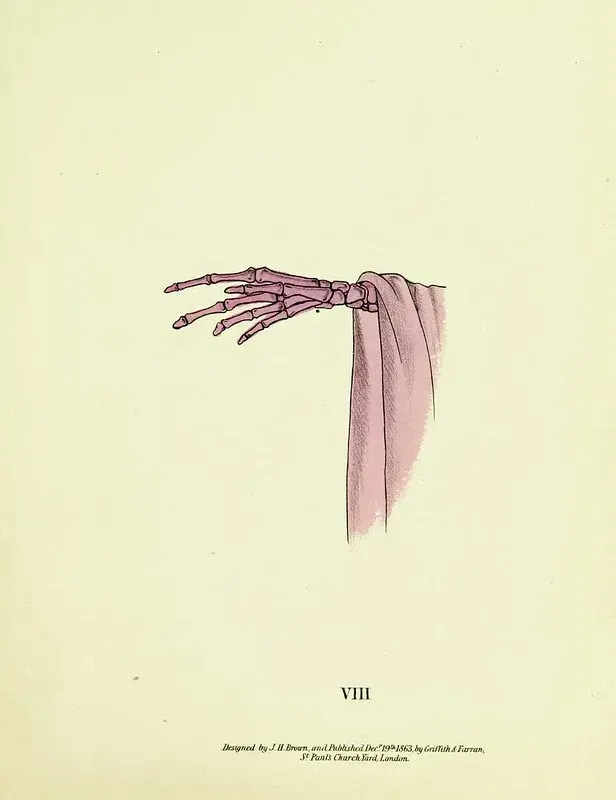
Artist J. H. Brown, Date 1863, From Spectropia: or, Surprising Spectral Illusions, Showing Ghosts Everywhere, and of any Colour

Scene 2 Morning. AUSTIN is watering plants with a vaporizer, LEE sits at glass table in alcove drinking beer.

"I never realized the old lady was so security-minded," I said aloud, clear and distinct.

I took a drink from my pantomimed beer and placed it back down on the table, holding my focus on it for a few beats. One. Two. Three. Then, slowly, with my hands still wrapped around it, I rotated them both horizontal, tipping the can to the point of where it would have split out from its top, onto the table, and eventually onto floor. I imagined the liquid inside, bringing a kind of presence of place over me I still can't explain. Lee's voice was gone, off somewhere I had no intention of following. I was in control of my mind again, for now.

"How do you mean?" the reader asked.

They sounded timid, a bit off guard. Their unease made me feel powerful.

"Made a little tour this morning." I looked over both of my shoulders. "She's got locks on everything. Locks and double-locks and chain locks and—what's she got that's so valuable?"

Never put locks around me when I was young. Lee had returned. Why didn't you do that for me, huh Mom? Edie. Mom. Edie...why won't you let me go? I tried to stop him. All of a sudden, there was no air in my lungs. I struggled to take a few, quick, meager gasps of air and get them into my lungs, but the reader was already onto their next line.

"Antiques I guess." The reader shrugged, playing along with my glib attitude—probably an actor. "I don't know."

"Just the same crap we always had around." I looked back at them with a new sense of contention. "Plates and spoons. Spoons and plates."

Who cares? Lee's violent laugh echoed within me. These are my words, anyway. This is my world. Who are you?

The reader paused and looked up at me. They noticed that I had skipped something. I looked back at them and nodded, hoping it communicated direction.

"I guess they have personal value to her."

We recovered and continued.
"Personal value!" I laughed so loud that I saw the shadow of the reader jolt. The others, up by Lisa, did too. "Yeah..." I continued, "Just a lota' junk. Most of it's phony anyway. Idaho decals. Now who in the hell wants to eat offa' plate with the State of Idaho starin' ya' in the face?"

The reader snorted and so did Lisa from the back.

"Personally, I don't wann' be invaded by Idaho when I'm eatin'. When I'm eatin' I'm home. Ya' know what I'm sayin'? I'm not driftin', I'm home. I don't need my thoughts swept off to Idaho. I don't need that!"

An unauthored rage was starting to build in me. I couldn't reach out and hit the reader, but I wanted to. Lee wanted to. I wanted to? I didn't know. The only thing that was true was that untraceable anger. I had no other choice to use it for the next line.

“You go out last night?” asked the reader.

“Yeah, yeah," I answered. "I went out. I went out. Why?” I slung my hand back to finish off the rest of my beer. Then I brought up my feet and loudly dropped them on the table. “What about it?"

“I thought..." they started to say, then stopped. I could see they were trying to find their place, distracted by the noise I was making. "I thought—um."

They sounded even more hesitant. Intimidated. Their weakness made me hungry, like an animal, like a dumb, impulsive, needy beast. Then I realized that I had muddied the lines again. Dumb, impulsive, needy beast. A line from An Actor’s Handbook suddenly came to me as if some kind of salvation:

AUDIENCE: The more the actor wishes to amuse his audience, the more the audience will sit back in comfort waiting to be amused; but as soon as the actor stops being concerned with his audience, the latter begins to watch the actor.

I paused, quickly running through them in my head like I had done all night, bringing all attention back to the world between the reader and I. My vision, blurred from the lights and the attention, cleared. A second of darkness had passed, but there they were, my next line and my place again, as if waiting for me to return to them.

"Why?" I asked.

"I heard you go out."

"Yeah, I went out. What about it?"

"Just wond—"

“Damn coyotes,“ I blurted, cutting them off. "Kept me awake."

I got an impulse to rise so I went with it and moved downstage, turning my back to them entirely. I brought the beer. The reader continued.

“Oh yeah, I heard them,” they said. “Killed somebody’s dog or something.”

The reader coughed and squirmed around in their chair as this thought arose: Hell does he know about coyotes? Austin’s pulling that out of his goddamned ass like he does every goddamned thing. That’s some New York shit thing to say.

"Yappin', yappin', yappin their fool heads off," I said, turning profile and then peaking through an imaginary window, on the hunt for the those damn sandy mutts. "They don't yap like that on the desert. They howl. These are city coyotes here."

The reader half-laughed. "Well, you don't sleep anyway do you?"

Like the starving mongrel that I was coming upon a fresh corpse, I pulled my fingers from the imaginary drapes, turned from the window, and paused to stare dead at the them. I didn't need to say anything. Not right away. The silence was enough. Then, at the moment the energy started to flip from intentional to accidental, I stood as tall and straight and mountainous as possible.

"You're pretty smart aren't ya?"

The reader didn’t respond as fast as I wanted to, so I spit on the stage and ground the spit into the wood with the toe of my boot. A soft, hushed, shocked gasp rippled through the audience followed by some varied whispers in the wings. Then I threw the beer can from across my body, watching the reader and the audience follow it for a second as if it were real.

“Am I speaking fuckin' Chinese or something?" I asked. "What I said was, you’re pretty smart, aren’t ya?”

“How do you mean?” The reader's voice was shaking.

I imagined my father, Dean, looking up at me with his tiny eyes and thin skin around his cheeks; his hair aged and gray. It's how he sounded when he was losing an argument with Edie. Whenever he found himself trapped, his register would spike and everything about him would become constricted, like a fist about to go limp. I thought of how he betrayed Edie—Mom.

“How do you mean?” The reader asked again.

“I mean you never had any more on the ball than I did.” I skulked around the table and to the edge of the stage. "But here you are, getting invited to prominent people’s houses. Sittin’ around like you know something.”

Now that I was closer than I had ever been to the reader, I could make out their face. He was just a kid. So was I, but he was much younger, maybe 15 or 16, with short brown hair and a strong jaw line, but probably only a freshman in high school. Innocent, which would have made me feel guilty if I hadn't been in the scene.

“They’re,” he enunciated, “Not so prominent.”

“They’re a helluva a lot more prominent than the places I get invited to," I answered.

“Well, you invite yourself.”

I brought my bare knuckles up and pressed them into my chest, staring down the reader. Then I turned, quickly, and from downstage went again to the window. This time I took the chair with me. I dragged its legs, making as much noise as possible. They would hear me. They would pay attention. They would remember us. There wasn't an ounce of hesitation or second-guessing within me. Everything felt in sync and attuned to myself, the character, the play, and the space.

With the chair up to the room's imagined window, I saw, figuratively, but perhaps not, a few hazy, slightly crooked picture frames of old family photos. I wasn't sure who they were. Their faces were blurred and brushed aside; heavy dust lined their frames. Their dirtiness and disregard disgusted me, but I still wasn't sure in that moment if that feeling was coming from both Lee and I conjoined. Then, a huge wave of the stink of rot struck me: decaying furniture, chemicals from air fresheners, decomposing food, the dry flimsy pages of the phonebook—death. This exhumed creation and its impression moved me to flee, but I couldn't because of the obligation to the audition and everything tethered to it.

“That’s right," I said. "I do. In fact, I probably got a wider range of choices than you do, come to think of it.”

My skin was cool, even with the still-beating heat from the lights. Any sweat from before—gone. Wondrous. The entire theatre was quiet. Their attention was mine, which brought up another one of Stanislavski's lines from my memory:

These new spectators do not expect writing or acting which is merely externally effective in external plot and action, Stanislavski wrote. They look for deep feelings and great thoughts. The audience is a creative participant in the performance of a play.

“I wouldn’t doubt it,” the reader said, unaffected.

“In fact...I been in some pretty classy places in my time.” I dropped the register in my voice. “And I never even went to an Ivy League school either.”

An old, arbitrary memory whipped across my mind. Edie was stuck in her bedroom. Maybe it was the bathroom. A room. The door was closed. Dean was pounding on it with both of his fists. There was the rattling and ripping sound of him trying to break the knob of the door off. Then a snap. A heavy thud as the knob was thrown down onto the carpet. It was winter and it had just rained. When rain came to San Francisco, the air turned thick and muggy and warm, always flushing my cheeks and blurring my eyes, forcing me to feel more tired than I really was. My memory placed me in our kitchen or maybe in the living room, but at a distance. I was afraid. I felt weak and out of control. I had hope, but I could have just been putting it there from the present. I remembered being very, very still. That side of Dean rarely came out. When it did, he seemed like a character out of a bad play; real but unreal. The anger looked and felt like he was trying to break out of something, like he was stuck, while conversely like he was simulating something he had seen an actor on-stage or a movie do. A part of me didn't believe him, yet the terror was still there. Edie was crying on the other side of the door, which Dean couldn't get into because there was a lock on the inside. She was yelling over and over, I can't do it anymore. This was it—I'm done. Done with what? I may have asked. Done with me? I may have thought.

“Umm…” the reader stammered, looking for his place in the script. He flicked through a few papers, trying to reorient himself. Something had thrown him off. “You want breakfast or something?”

“Breakfast?” I asked, recoiling.

“Yeah. Don’t you eat breakfast?”

A part of me—maybe the real part—wanted to say yes. Ave, not Lee, wanted connection. He wouldn't let me. I needed to keep Lee and the others thereafter if I was going to be the actor Edie trained me to be. The burden of masks then was already heavy, but it was the only way I knew how to connect and be accepted: by keeping them on. If I understood what was behind them was more of the same imitations, maybe I wouldn't have erected and chased all those signs to get to where I already was. The transition was invisible from the inside. Then again, if I didn't, would I have ever discovered that the truth of the lie is the truth?

“Look," I replied. "Don’t worry about me pal. I can take care of myself." My breath choked for a moment, then released. "I can take care of myself. You just go ahead as though I wasn’t even here, alright?”

The reader looked up, appearing as if they were about to say something, but stopped. The energy on the stage was still and tense. What were they going to say? Who were they going to say it as? Say what you want to say for once, Austin. An invisible cord of tension pulled taut.

“Well,” the reader said clearing their throat. “Where'd you walk to last night?"

I stood up sharply from the chair and walked to the edge of the stage. No one said anything. No one, as far as I could see, was looking away. I thought about the desert. I thought about what it meant to be seen as desolate, as nothing, as death. For others— like the bugs, the coyotes, the lizards, and the real people who lived out there and survived off it, the desert was home.

Looking over the reader, Lisa, and the rest of them, I imagined the endlessness of the desert in harmony with human creativity and collaboration, playing out perpetually underneath a multitude of stars, and felt the presence of infinity in that aligned stillness. I knew I had a line, but Lee wasn’t thinking about my line. He was thinking about the desert: what he felt out there, what he didn’t feel, and how only the true ones wrestled with the drive of death beside the drive of life.

“Different kind of heat. Out there it’s clean. Cools off at night. There’s a nice…” I raised my hand and moved my fingers to feel the cold air between them. “A nice little breeze.”

That moment hung there, existing for as long as they would let me have it within that transfer from the unreal to the real.

Then I heard Lisa say, “Thank you. That was great."