Actor: A Novel in Three Acts
I left for Chicago the following week.
The plan—more of a spontaneous urge to flee—was immediately sidelined by the one person I was trying to distance myself from. Edie, as she often did, proved my point without even knowing it, demanding I explain not only what was going on, but why. And she wasn't going to do it from the "concrete varicose veins" of Los Angeles—her words. She would only listen to my reasons for "doing away with everything I'd been given" in San Francisco.
She made a very distinct point of that.
"I can't hear the truth, or whatever you're going to tell me, over the traffic," she said. "Beep, beep! Toot, toot! Madness. And if I'm going to die from whatever you tell me—whatever you're "doing now"—I want to be in the city where I was born."
So, of course I went, and yes, there was a big blowup cast with tears, screaming, and long, drawn-out explanations. Drama was what we knew, but ironically, most of it came from not being able to properly communicate. Our back and forth then was doomed from the start as she didn't want to understand, and to make sure she didn't, she—going against her training—didn't listen. At one point she even boxed her own ears like a child.
Dean had understood, but from a place of indifference. That's not fair—he cared, but more so because it gave him one less thing to think about...me. His affection came from a place of self-serving, which is who he was as a person, a husband, and a father. I have accepted that the way I accept things in nature: that I will never be the tall leading man (I'm 5'9"), or be remembered as someone who "changed everything" in the world of acting, but merely as someone who added to it as the craft moved forward.
"Not everyone can be a revolutionary, Ave," Edie so often told me. "But you can add strokes of new color to the easel, strengthening and maybe even redirecting some paint to a new place to honor the old while looking ahead."
I still don't know if Dean has realized his narcissism serves himself rather than the ones he claims to love. But when he said—very simply—good luck with a wink and told me to check my bank account when I landed, I took the money. Of course I did.
What could I do? I was broke.
So, bout after bout through the week, my final day and night with Edie finally arrived. "Our curtains," she called it, but we decided on a truce and sat face to face, tucked into the breakfast nook of our kitchen. I could sense she wanted a drink by the way she gripped the edge of the table, both eyes downcast, every so often glancing toward the laundry room where another door hid the wine and liquor. That wouldn't have done anybody any good. It would make everything and everyone louder, especially in of matters of the heart. No, not a good idea at all.
"Tell me one more time," Edie said. "I need to hear it plainly, like a child's poem, for me to understand—even though I don't think I ever will."
"To see if I can actually do this on my own," I told her.
"Why?"
It hurt me in a very specific way I was too young to articulate. Even now, I don't know if she was playing dumb—or worse, lying—to get me to stay. My desire for independence could have been something we connected over. It could have been something new, something other than acting we could have shared. But she kept this to herself, for herself, like so many other things.
"You've always been there. I'm thankful for that, but now I need to prove to myself that when I'm out in the world without you and Dean's help, I even want to do this without you."
"You want to quit acting?"
"Is that what I said?"
"No," she shrugged. "but that's what you implied. There's a tone."
"I didn't."
"To be honest..." she said, leaning back against the wall and folding her arms. "This is worst than I thought."
"I've only had a very small, very protected relationship with acting, with theatre—with art," I tried to explain. "I want to deepen it. Explore it. And doing that myself, without any help—free fall, I guess—means I'm the only one who can catch me when I inevitably fall." I paused. "If I even want to catch myself at all."
"But Dean's paying your rent," Edie said. "So how does that make any sense?"
"Jesus, I need some help or I'm going to die over there."
"Fair," she said. "That's fair."
"You're one to talk. He's been paying both of our rent for as long as I've been alive."
"I just said it's fair you're taking the money."
"There was a tone."
"You're right, you know." She said this solemnly, as if something painfully veracious had just dawned on her. "To take it. You learned it from me I guess. Every artist needs their benefactor." She looked from her lap up at me. "Smart boy."
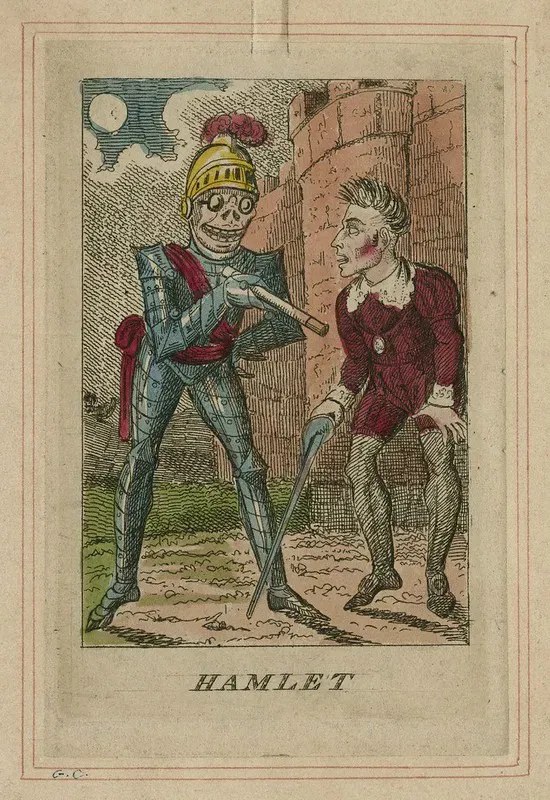
On the table was a pad of post-it notes. Beside it, a pen. She took it and drew a childish drawing of an Elizabethan shoe.
Edie nodded, calm, semi-collected, but sensed she was fraying at the seams. I studied her as she looked to be cycling through every tactic she had ever studied to get me to change my mind. She already had the objective—get me to stay—but what was her intention?
"Every great artist needs a muse," she said finally. "And for so long it felt like I was yours. But now I'm realizing—I've actually been your teacher all along. And now that you've apparently learned everything there is to learn, used me up, you're done with me. Like a bottle of beer. Like the butt of a roach you're eager to flick to the street for something new."
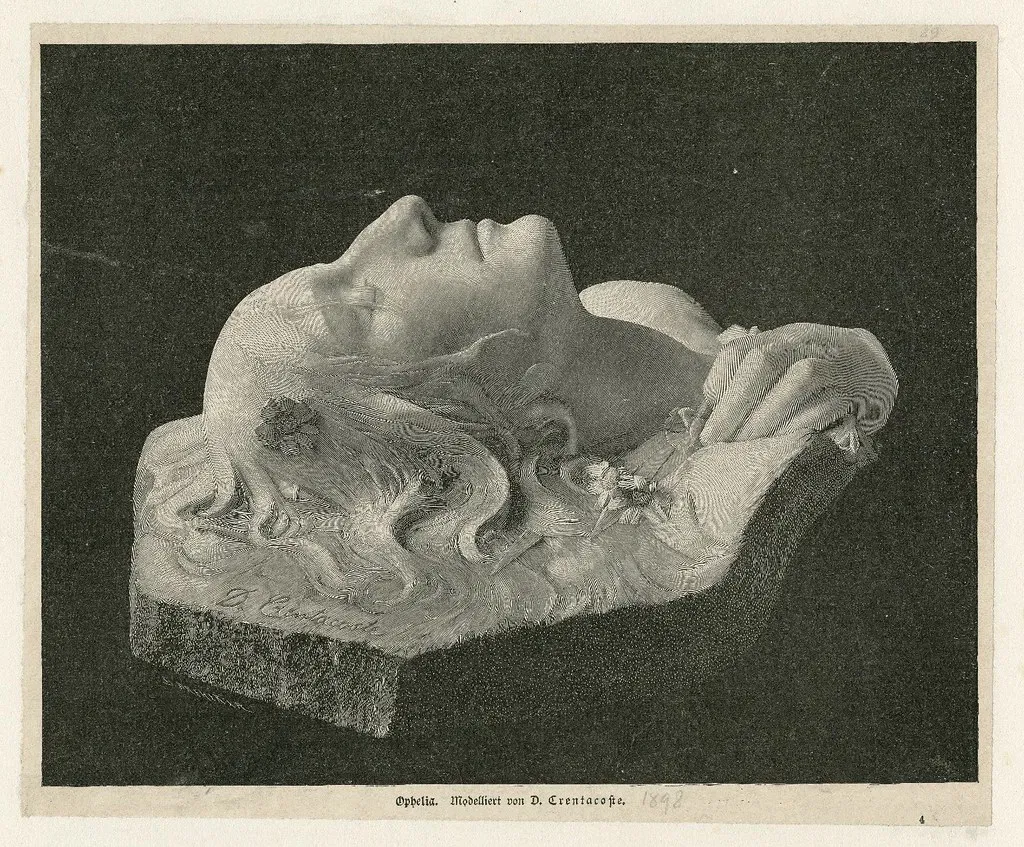
I put out my hand to touch hers, but she withdrew, leaving the post-it note and pen. So, I took it, tore hers away, and drew my own: a little cartoon skull with an even smaller flower beside it growing from the ground.
"No one's abandoning you," I insisted. "Think of the parakeets in the neighborhood. Remember when you taught me how the parents keep them in the nest longer, but slowly, over time, they start to practice flying and finding food?"
"The young..." Edie started to say, "almost have to push their way out to fly."
She reached over and took my skull drawing with the little flower beside it.
"You were always so talented."
"Because of you, Mom." I tried to take her hand again, but she kept her distance.
"I'm afraid," she said. "I'm afraid of what I might miss. I'm afraid of what you might do without me. I'm afraid that everything I taught you won't be enough."
"It will be," I said. "Fear no more..."
"The heat o’ the sun...the frown o’ the great...the lightning flash," Edie recited, then looked up at me. "Whatever it is, it better be good."
We laughed, both knowing she meant it.
She held up the drawing and half-smiled. "This is nice."
There was one "mandatory" requirement Dean gave me if he was going to pay my rent for three months while I got settled. Remember, I was broke, hadn't worked during conservatory, and had no savings. I'm not proud of it, but we all accept necessary evils at one point or another to have our chance at doing something we believe to be the super-objective of our lives.
The "mandatory" requirement was a weekly phone call, which seemed like a fair trade for reinvention. Drinking while doing so was commonplace. We'd often drunk together back in LA, when I first started imbibing, so it felt natural to continue the ritual from a distance. That and drink made conversation easier.
So over cocktails one evening, fairly comfortable in my one-room apartment with its small table and chair, a kettle, and a window overlooking Sheffield, we talked, though I could sense things were still raw between us.
Maybe it came from Edie being exhausted after having moved all of her things from LA to San Francisco. With me no longer in LA, it no longer made sense in her mind to split time between the two places. Dean didn't mind, as it gave him time to work, network, find his next project. His last movie—a period piece specifically for Netflix—hit #1 for a few days so he needed to make sure to outdo himself. The move also gave Edie the space she needed—space she never gave herself because of me—to really get back to what she'd started eighteen years ago. She'd gotten on her feet a bit at the Victoria Theatre, but since then, not much.
No one was waiting for her return. That, I think, is where it hurt the most.
"So," I started. "How was your move?"
"I hated LA as much as you do. Everyone's young there—or has been there since they were young. It's as cliquish as being in undergrad conservatory, which you know is hell. Everyone falling in "love," fucking, breaking up, and then tearing each other apart...bourgeois soap opera everyday, every night. On top of that, Hollywood is dying. Not dying, transforming into something worse than death. I don't know because I don't want to know, but I hear things. Everyone's streaming things now. I can't whine too much because of Dean, but I will." She paused and drank. "What does that even mean? Streaming?"
I took a sip from my watered-down drink.
"It's digital," I said.
"It's boring. Anyways...after everything Dean did to me—well, that was the last straw."
"What did he do to you now?"
She scoffed. "He didn't tell you yet?"
"The only contact I've had with the man was about money," I explained. "That and a few emails about contacts out here which, I'll tell you, I ignored."
"I won't bore you then," she said. "Anyways, I don't want to ruin my cocktail by going into a sob story everyone's heard: the damsel in distress, the mad king, and the young prince meant to save the world. Etcetera."
"I'm not planning on saving anyone," I admitted. "Maybe myself."
"That's good," she said. "As it should be—you're young. But anyways, I needed to leave. You know the feeling."
She let her comment twist in my gut like a barbed worm, dragging on her cigarette and muttering a few indecipherable words. Edie still adored her Parliaments, though her trash talk was getting worse. Lazier. Meaner. Before, a jab like that would have made us both laugh. Now it only hurt—a zero-sum game.
Edie had no idea where she belonged anymore. Her career, like most in show business, was on the verge of dissolving like the fog rolling in from the Pacific. In entertainment, there was no promise of longevity. Time was running out for all of us, but for Edie—in 2015, and as someone who refused to adapt—she was a relic. Worse, a stubborn one, loyal to an industry that didn't owe her anything, even though she believed it did. I think that's why she loved it and couldn't let go: that dance with extinction, that wager that maybe, just maybe, it wouldn't be her tossed into the annals of time like everyone else.
I poured myself another whiskey—Old Crow, the cheapest thing I could find. The brand didn't matter as long as it was cheap. Given my financial predicaments during school and now in Chicago, that was the rule. Maybe Bulleit if and when I landed my first gig. On the other end, I could hear Edie fix herself another double Sapphire Gin with Fentimans and a slice of lime. The ritual was the same, even from a thousand miles apart.
"I know it's presumptuous," Edie said, "and taboo to ask another actor what they're working on, but I'm your mother, dammit, so I don't have to play by those rules." She cleared her throat, took a drink, a drag, then another drink. "What are you working on out there in the cold and the snow?"
I inhaled the frustration and closed my eyes, trying to think of how many times anyone had ever asked me that question.
"It's been a week."
"It has," Edie said. "Feels like forever since you left, but I assumed you'd at least found some kind of work out there."
"Not yet," I said.
"Other actors? Directors? Set designers?"
"A commercial at the end of the week," I lied. There was no commercial at the end of the week. "That's about it right now."
"You think?" she scoffed. "Ave, you have to be on top of things."
"I am."
"What kind of commercial?" Edie asked.
"Not sure."
"You're not sure?"
I put my phone on speaker to get her out of my ear.
As I listened to her drone from the table, I spotted my reflection in the window. My brown hair seemed thin and disheveled. There were bags under my eyes. The skin on my face was smooth but red and flushed from the cold, my lips chapped. I looked terrible, and as I stared into my own eyes, hoping to see some flash of excitement—viewing, I imagined, what the rest of the world did—it felt like looking at a character of somebody else's imagination and wanting. I didn't like feeling separated, but I was.
A voice began to speak, gentle and inquisitive but implacable: What are you doing out there, Ave? Are you finding what you're looking for? Do you really think you can do it on your own?
There was no right answer. But sitting there in that small apartment, being there, was good enough. My mind zoomed out and there was my face, there was me, only me. I touched the window, felt the cold of the glass, and pulled back to my body, my self; warmth.
"Now I remember," I said. "The commercial is for socks. Putting all that Shakespeare and acting training to good use."
Edie laughed. "You have a way of saying the most terribly depressing things in the funniest way. Do you know that?"
I told her of course I did and reminded her where I got it from.
"Me, of course. Which I know, I know, is why you left. And hey, maybe you'll learn something hocking Hanes for rent money. Maybe you'll even meet someone through it. But there is no end to the amount of money businesses will throw at you to keep you from doing what you were born to do."
Her voice trembled, but all I could think of was how it always went back to her.
"And that's because I understand you need people in this business, Ave." Edie's voice was thin and delicate, like a cheap wine glass. "Trust me. I didn't take the help when they told me to on principle, and eventually...the phone stopped ringing. Now I'm nothing. But at least I created something pure with the time that I had. I can say that. Not many can."
Outside my window, a lone shadow of a person shuffled along. I thought of Beckett's Waiting for Godot, which I had been in once in conservatory. I remembered how the frayed, thin fabric of the costume smelled like cigarettes and sweat throughout the run. No one saw reason to wash it, not even me.
After opening night, Edie had shrugged at my performance and said, "Waiting and theatre don't work. Theatre is action, stakes, life or death. Waiting for hope is a dead man's game."
She had a way of even checking the geniuses.
"I'm not going to lose myself to selling socks," I told her. "This is exactly what I was trying to tell you back there."
"There? You mean home."
"Yes."
"So, after sending you to CalArts," Edie started, "and training you with the best acting teachers, getting you close with the best directors, casting heads, and local producers—it's now our fault these circles are holding you back from whatever it is you're trying to discover? To express? Tell me."
"There's no getting around you when you commit to something," I said. "But the tragedy is you don't know when to stop, when to listen, and when to change."
Edie snickered, then recited out of thin air and memory:
Two loves I have of comfort and despair,
which like two spirits do suggest me still.
The better angel is a man right fair,
The worser spirit a woman colored ill.
She stopped and asked, "Do you know the rest?"
I didn't say anything. I took a drink.
"Tsk, tsk," she said, and continued:
But being both from me,
both to each friend,
I guess one angel in another's hell.
Yet this shall I ne'er know,
but live in doubt,
Till my bad angel fire my good one out.
"I answered your call to say hello," I told her, as calmly as I knew how. "To see how you were after your move. I'm not here to run lines. Don't force me not to next time."
"Don't threaten your mother," Edie said.
"Goodbye, Edie."
"Don't," Edie gasped. "I'm sorry. I won't. I promise."
I pushed my pointer finger into the growing frost on the window, felt the sharp cold bite the skin of my fingertip. I made two faces at myself in the blurred reflection: one with a big smile and one with a deep frown.
"Are you there, Ave?" Edie whispered.
I didn't answer.
"Remember how I taught you how to roar?"
My cell-phone dinged. I looked at the name. It was my agent Tim. What could he want? He never called this late.
"Are you there?" Edie asked. "Your mother is not done talking. Tell me about that audition earlier this week. Maybe I can help."
"I've got another call coming in, Edie," I told her. "I need to take it."
"Who's calling you at this hour?"
"I don't know," I lied. "Maybe it's a callback."
"I want to talk about what's going on. I want to help. Please."
"I need to—" I started to say, but then I envisioned her alone in the dark with nothing around her but her old awards, afflicted by a pale, split-nail moon.
"I will, Mom," I said, and switched calls.
"Tim," I said. My voice was eager, desperate for something. I became a little disgusted with myself. "How are you doing?"
"You're up." Tim's voice was deep and gravelly.
"I'm working."
"On what?"
"On Edie. She's having a hard time that I'm gone."
"You're always doing something."
"Trying," I said. "Could use some help."
A ruffled sigh struck the receiver. Tim had been around all the blocks, starting in New York's theatre scene in the early sixties and eventually making his way to San Francisco. That's where he met Dean and Edie.
"Yeah. Obviously, I've known her longer than you. She's your mother, but she's also an actress. Those are two different worlds."
I agreed.
"All I can say is Edie's going to Edie, and you, Ave, have to do Ave."
I imagined Tim shrugging his big, oafish shoulders and cocking his basketball-sized head to one side.
"Listen," Tim said. "Let's get down to brass tacks. There's a casting director at Steppenwolf who called me today. I've known her since the New York days. I called her first to tell her..."
"Tim," I started to complain. "Man I told you."
"Shut. It. Ave. I said you were perfect and yes, I vouched so don't fucking hate me. I'm your agent and this is what agents do. This isn't Edie or Dean getting you any roles. This is me doing my job, understand?"
I said I did.
"I also noted that little award you got. Why? Again, I am your agent and she asked if I knew anybody in Chicago. Relax with that fresh start shit. With me at least. You can do it to Edie and Dean, but my job is to find you work, so I found you work so I can get fuckin' paid. You understand?"
I said I did again.
"She told me they've got a spot for one of the leads. One of the actors they cast—for the role of Steve or Austin, I can't fuckin' remember—broke contract and went to Europe for some movie with Charlize Theron or Scarlett Johansson or something."
"Are you kidding me?"
I suddenly wished I hadn't drunk all that whiskey.
"All these stage actors are taking movie roles now. More money, more publicity—makes sense to me. Actors are still running for the stage, don't get me wrong, but it's just not the same, which is why she's interested in you. That's not to say you're not talented—it's not her casting for the bottom of the barrel—you're just new to the city. Literally a week. Normally, they would let you freeze a little bit, but they're pinched and want to see everybody."
"I get it, I get it."
"Emailed you the side," Tim said.
A ding sang from my laptop from the one of two bags I packed.
"I know I don't need to tell you this but get ready."
"What's the play?" I asked.
"True West," Tim said. "I assume you've heard of it?"
"If I hadn't heard of Shepard by now," I said, "I shouldn't be acting at all."
"Relax," Tim said. "I'm kidding."
"Who am I reading for?"
"Lee," Tim said, followed by a deep suck of his cigar. "I think you're a better fit for Austin, but that's what the director wants. What the hell do I know?"
"Got it."
"Bit short for it in my mind but maybe thats' the Malkovich thing."
Tim sighed after another nervous laugh, shallow and meek, like he was trying to tell me something.
"Tim?"
"I'm visiting her tomorrow," Tim said. "In San Francisco. Figured I should go see the old girl after all that shit with Dean. She hasn't been returning my calls. Something's up."
"What is this shit with Dean? She hasn't told me."
"Really?"
"No."
Tim paused. "Let your father talk to you. I don't to get into the middle of your troupe."
"I can't deal with him right now. Feel dirty enough taking his money."
"If you're smart," Tim advised. "You'll take the money and call him and talk to him after this audition. Least you can do. Don't forget, Stanislavski was a rich kid too and look what he did."
I agreed.
"Imagine he didn't take the money."
"I get it!"
"About your mom...I'm just worried about her," he said. "But don't let that make you worry, okay?"
"I'll try."
"Better get to work, Ave. Sorry it's so late—you'll adapt."
"I always do."
I dug through my stack of old plays as Tim told me more about the director. All that information mattered, but I was more interested in the chance to finally act. I pulled out Shepard's collection, the one with his black-and-white face glaring on the cover. The pages were dog-eared and soft on the sides from all the years I'd had it. Edie had given it to me for my eighth birthday. I flipped the book over and opened the back flap. There was something scribbled on it.
I believe in my mask. The man I made up is me. I believe in my dance, and my destiny.
"Just be yourself," Tim advised. "She'll see your talent. They have a good eye."
"Right. I'll talk to you after. Thanks."
"And don't tell Edie I'm coming to see her, okay? It's a surprise."
"Of course," I said, and hung up.
I was about to start looking over the side when Edie's name flashed on my phone screen. There was nothing else to say to her. That was always going to be the hard part. The thing I needed to do was to rehearse, be on the page, and in the play. She would be there tomorrow and she knew I would be too.
I shut the phone off completely, stepping away from its myriad distractions, and got to work.


Member discussion